

-150x150.png)
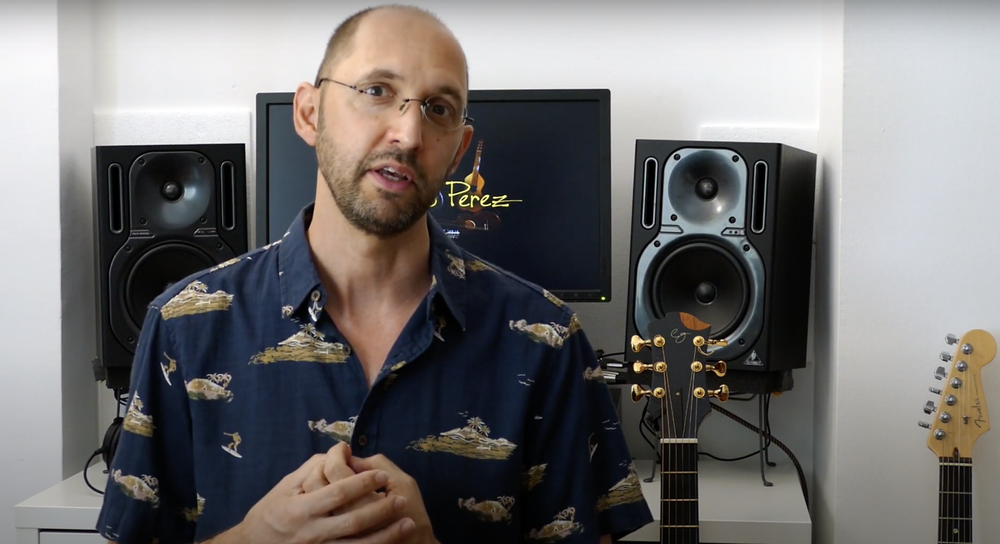
Dr. Farias’ training in musicians has proven to be highly succesful. The method allows you to unlock your movements to discover your own way to use your abilities most creatively and efficiently. Patients following our training protocols have experienced unprecedented improvements and full recoveries from Musicians’ focal dystonia.
During the last 25 years, Dr. Farias has helped hundreds of musicians affected by Focal dystonia including several Grammy award winners and performers of all styles, musical traditions, and instruments. Dr. Farias has served as a coach to Deutsche Grammophon, Sony Classical, Philips, and EMI musicians. Because of his extensive experience and deep understanding of the condition, Dr. Farias is considered the international reference in regards to re-training of musicians affected by dystonia.
Dr. Farias’ method is based on precise exercises that induce neuroplasticity in the sensory/motor pathways affected by dystonia, allowing gradual motor control recovery.
Start your Recovery Journey Today
Join the complete online recovery program for dystonia patients.
TESTIMONIALS
“For two and a half years now I have suffered debilitating problems in my
right shoulder, arm and hand. After seeking treatment from various sources
and trying numerous therapies I was still unsuccessful in my efforts to
alleviate my troubles.
Eventually I found out about Dr. Farias and his unique method of working with people with focal dystonia and other repetitive motion disorders.
It has been a little over a month since my sessions with him and already I can do things that have been almost impossible for over a year.
Although I still have more work to do I am optimistic for the first time in a long time that I am on the road to recovery.
He brings a special set of skills to the process in that he understands the neurological basis of these problems as well as being a professional musician.
There is no other person to my knowledge that can bring this much knowledge to the table to help instrumentalists.
I recommend working with him to anyone with these sorts of issues or to anyone who simply wants to avoid them in the first place.”
David Peck, Principal Clarinet, Houston Symphony Orchestra
“In our sessions, Dr. Farias showed a deep understanding of how the body and mind can work together to play in a free and musical way. He was very perceptive about my playing, and he introduced the concepts I needed to apply to overcome FD.
With his guidance, I saw significant improvement in a few days. I felt for myself that it was possible to play freely, and this was the foundation for the recovery I am experiencing now. One year after my sessions with Dr Farias, I can look back and see how steady my progress has been. I am playing normally now, and as a bonus, I find his approach continues to be helpful in tackling the normal challenges of playing.I am most grateful for his help. “
Dominique Laplante, National Ballet of Canada Orchestra (Pr. 2nd violin), Canadian Opera Company Orchestra
“Dr.Farias is truly a great, great resource for musicians like myself who have struggled with the seemingly intractable challenge of Focal Dystonia. In my case, a 12 year nightmare.
You know, I had my doubts, going into my sessions, that there was more to understand than I already knew about the problem. How quickly my misconceptions evaporated in the face of his calm, professional and irrefutable coachings!
Now I see that there were three important areas of insight that he opened up for me.
First, was the understanding of the true nature of FD, and of the psychological handicap that accompanies buying into the current, most popular theories about the condition.
Second, was an appreciation of the step by step process, the ‘peeling back of the layers’, needed to get back to the source of the original cognitive event. And third, was the arrival at specific exercises and routines which will most efficiently reverse my particular manifestation of ‘dystonic thinking.’
In short, Joaquín has given me, and my career, nothing short of a new lease on life.
And for this I will be eternally grateful.
With great admiration and respect”
Clayton Haslop, Violinist, Avatar, Matrix and Titanic Concertmaster
Start your Recovery Journey Today
Join the complete online recovery program for dystonia patients.
Related Reading: